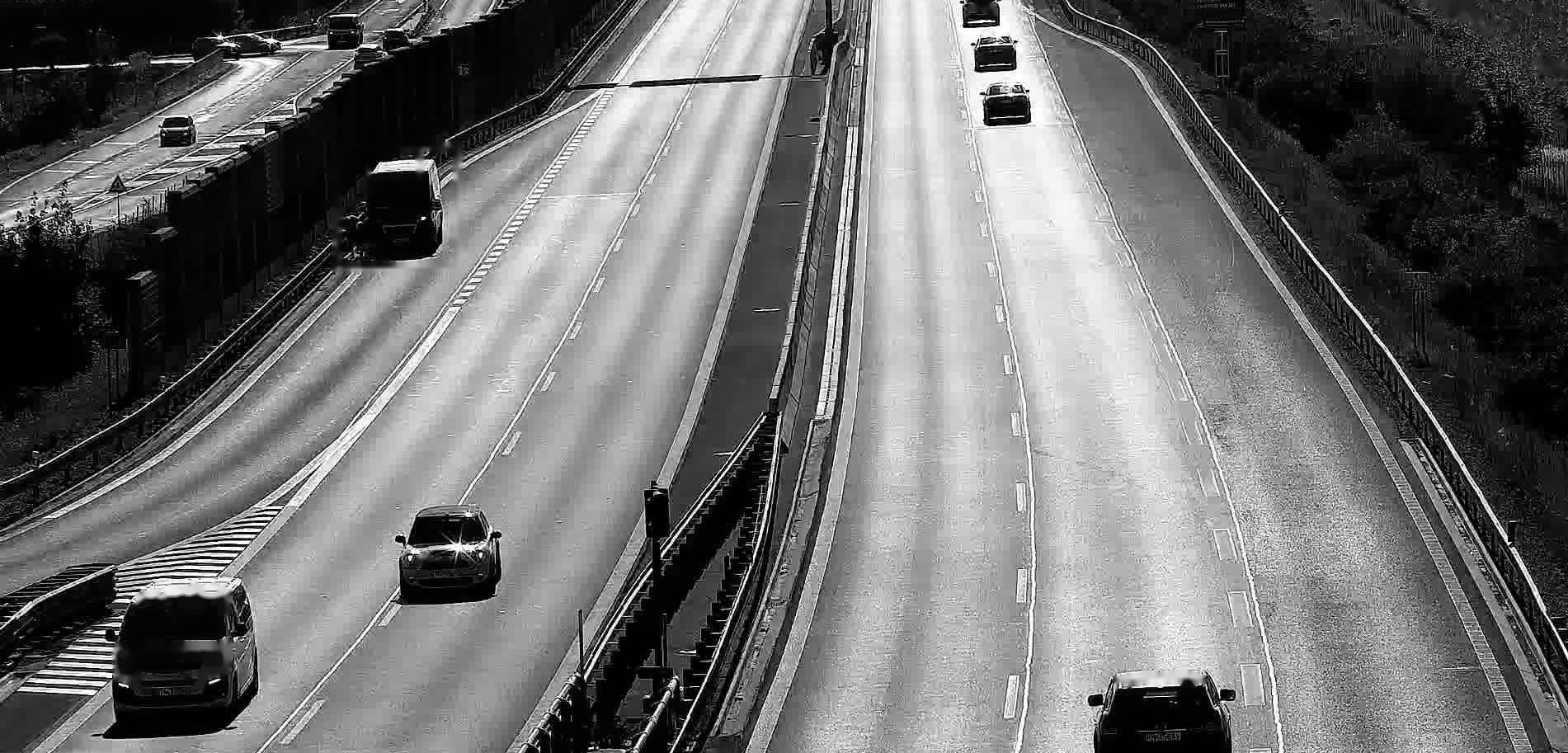
Increase Traffic Safety and Flow with Our Intelligent Analysis
In today’s fast-paced world, effective traffic management is key to ensuring safety and smooth flow on our roads. Our company specializes in advanced data analysis of traffic camera footage, helping you move to a new level of monitoring and response.
Simple Deployment – Use Existing Cameras
You do not need to change your existing cameras to deploy our solution. Our technology is designed to be maximally flexible and cost-effective. The analysis is performed only on the current video stream, whether it originates from Digital (IP) cameras or Analog (CCTV) cameras. This approach means there are no additional investments necessary in new camera hardware, guaranteeing a rapid integration into your current infrastructure. Your only concern will be granting access to the video stream for our software.
How It Works
We leverage cutting-edge Artificial Intelligence (AI) to continuously analyze data from your cameras. Our system is trained on hundreds of thousands of real-world traffic events, allowing it to accurately detect stopped vehicles on roads, highways, or in tunnels with a high degree of precision.
Upon deployment, we use pre-trained models. However, the key is that we train a unique model for each camera, with separate training for daytime and nighttime footage. This adaptive approach continuously optimizes detection based on unique conditions (such as camera angle, lighting, or intersection type) and is progressively fine-tuned to the specific traffic situations of each camera. This ensures maximum reliability and efficiency.
When the AI identifies an unwanted stop, the system sends an alert to your operator, who can then take action to help prevent accidents and mitigate traffic congestion.
From Camera to Alert: the Detection Process
- Video input: the software reads the existing stream from your IP or analog (CCTV) traffic cameras.
- Vehicle detection: AI video analytics finds vehicles in every frame, including distant vehicles, vehicles partly hidden behind road signs and vehicles in heavy traffic.
- Stop recognition: the system tracks the vehicles and recognises when one stops where it should not. Masked zones, such as lay-bys or parking areas, are ignored.
- Operator alert: the operator receives an alert with the camera image, verifies the situation and decides on the response.
Video Vehicle Detection Day and Night
Unlike inductive loops, which only register a vehicle above the loop, video detection covers the whole camera view. Lighting on a road changes completely between day and night: headlights, reflections, rain and low visibility all change how a vehicle looks on camera. That is why each camera has separate models for daytime and nighttime. See how it performs in the gallery of real detections.
Part of Your Incident Detection
Stopped vehicle detection is a key part of automatic incident detection (AID) on highways, expressways and in tunnels. Alerts can be integrated with your traffic control centre and the whole system is managed from a web-based control panel.
Why It’s Important
- Enhanced Safety: Automatic detection of a stationary vehicle allows operators to dispatch help or inform other drivers, reducing the risk of chain-reaction collisions and accidents.
- Improved Traffic Flow: Responding to obstructions helps keep the road clear, leading to a smoother traffic flow and fewer delays.
- More Efficient Operations: Our system automates the tedious and demanding task of constant screen monitoring. Your operators can then focus on solving problems rather than searching for them.
- Valuable Data Insights: Beyond detection, you also get valuable data on the frequency and duration of stops. You can use this information to optimize traffic infrastructure and planning.
Connect with us to discover how our technology can help your city or company achieve safer and smoother traffic.